Bayeux & the D-Day Beaches photographers, ready to book
From $1,878 · hand-picked
Book a Elopement Photoshoot
in Bayeux

AI photographer match — instant
Describe your shoot, get hand-picked Bayeux & the D-Day Beaches pros in under 10 seconds.
Or browse all 25 photographers across France
Elopement Photographer in Bayeux
Intimate elopement photography for couples choosing to celebrate their love privately in one of the most beautiful countries in Europe.
1 photographer ready to shoot in Bayeux
Elopement Photographer packages in Bayeux
Pick a package, book it directly. Every price is all-inclusive — the photographer's time, edited photos, secure payment and our support.
About Bayeux & the D-Day Beaches
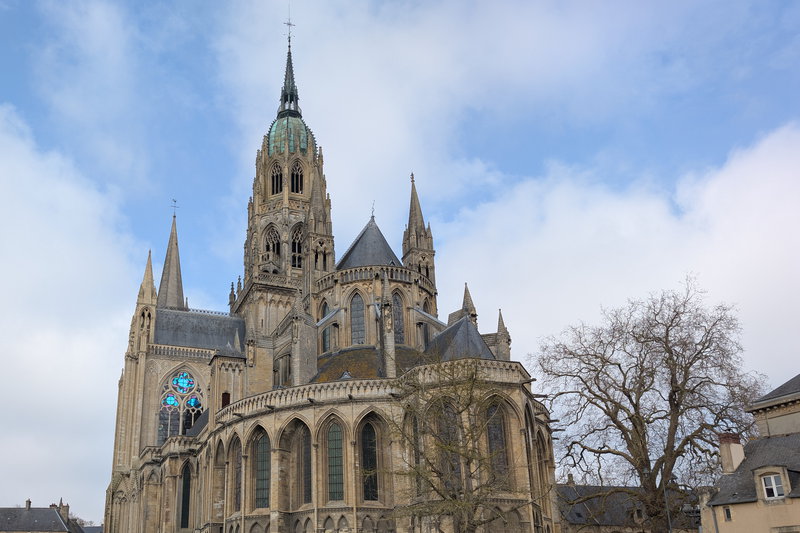
Bayeux is the rare Norman town that came through the summer of 1944 intact — the first to be liberated, and never shelled — so its centre is still fifteenth- and eighteenth-century stone rather than post-war reconstruction. The cathedral is the anchor: a Romanesque nave under a Gothic upper church, a green-copper lantern tower you can see from the ring road, and a chevet of flying buttresses best photographed from the garden on its east side in late afternoon. Below the cathedral the little river Aure splits into mill races that run behind the houses, past a working waterwheel and a stone washhouse, all reachable on a fifteen-minute walk. One honest note: the Bayeux Tapestry museum is closed for rebuilding and is not expected to reopen until autumn 2027, so plan the session around the town and the coast, not around the embroidery. The coast is the other half. Omaha Beach at Saint-Laurent and Colleville-sur-Mer is a two-kilometre curve of pale sand under a low bluff, with the American cemetery on the cliff above it; Arromanches, fifteen minutes east, keeps the concrete caissons of the Mulberry harbour standing out in the bay and lying on the sand at low tide; Pointe du Hoc, half an hour west, is a cliff-top field still cratered by naval shells, with broken bunkers on the edge. Tides run the coastal half of the day here — the caissons at Arromanches are walkable only around low water, and the tide moves several hundred metres — so check the tide table before fixing an hour. Light is soft and grey more often than not; May, June and September give the longest usable evenings.
Other photoshoots in Bayeux
Choose your photographer
Or browse the elopement photographer pros covering Bayeux & the D-Day Beaches below — packages, ratings, and live availability.
Only 1 photographer available in Bayeux right now
These photographers are usually fully booked — especially on weekends and during peak season. Book now to secure your preferred date.
Four Steps to Stunning Photos
From booking to delivery — we make professional photography effortless
Choose Your Path
Browse photographer profiles yourself and pick your favorite — or tell us your preferences and let our team hand-pick the perfect match for you.
Self-service or concierge — your choice
Book Instantly
Pick your date, choose a package, and book your session in minutes. Chat with your photographer to plan the details.
Secure payment with Apple Pay & Google Pay
Enjoy Your Shoot
Meet your photographer at the perfect location. Relax, be yourself, and let them capture your best moments.
Average session: 1-2 hours
Get Your Photos
Receive professionally edited photos in a private, password-protected gallery. View online, download individually, or grab the full ZIP.
Secure gallery with password protection
Your Money is Protected
Powered byWhen you book a session, your payment is securely held by Stripe — not charged to the photographer. The money is only released after you receive your edited photos and confirm you're happy with them. If something goes wrong, you can open a dispute and get a full refund. Zero risk.
Top Photo Spots in Bayeux
The most photogenic locations for your Bayeux & the D-Day Beaches photoshoot
Bayeux cathedral and the mill races of the Aure
A Romanesque nave under a Gothic upper church, a green-copper lantern tower — and, five minutes below it, a waterwheel turning behind the houses.
Best time: Late afternoon for the chevet from the east garden; the river lanes before nine
The Bayeux Tapestry museum is closed until at least autumn 2027 — don't plan around it. Ask the parish about tripods and commercial shoots before the day, and keep out of services.
Omaha Beach and the cliff above Colleville-sur-Mer
Two kilometres of pale sand under a low bluff, with the American cemetery on the cliff above — the widest, emptiest frame on this coast.
Best time: The last hour of daylight, when the wet sand mirrors the sky; check the tide table first
The American cemetery has fixed hours, screening and conduct rules — check before the day and keep any session there quiet and brief. The beach is exposed: an onshore wind decides what works.
The Mulberry caissons at Arromanches
Concrete blocks the size of houses, towed across the Channel in 1944 and still standing in the bay and lying on the sand at low tide.
Best time: Around low water, morning or evening, with a grey sky rather than a blue one
Check a tide table: the caissons on the sand are only reachable near low water and the sea returns quickly across a flat beach. The cliff viewpoint east of town shows the whole arc.
Pointe du Hoc
A cliff-top field still folded into shell craters, with broken concrete bunkers standing on the edge above a thirty-metre drop.
Best time: The last two hours of daylight, when low western light picks out the craters
Fenced sections change as the cliff erodes — stay behind the barriers. The site has its own hours and conduct rules, so check before booking. Expect wind on the point.
Frequently asked questions
Do we need a permit to elope in France?
It depends on what kind of ceremony you want. A symbolic ceremony — exchanging vows with a celebrant or just each other — needs no permit at all and can happen in a lavender field, on a clifftop or a mountain meadow; this is what almost all eloping couples choose, handling the legal paperwork at home before or after. A legally binding civil wedding in France is only possible at a town hall and requires that one of you has lived in that commune for at least a month, which rules it out for most visitors. Note that some sites — the gardens of Versailles, Paris museums, certain protected beaches — restrict professional photography, so ceremonies happen near, not inside them. Your Photo France photographer will flag any location-specific rules during planning.
How long does an elopement photography session last?
It scales with your day. The minimal version is a 60-90 minute session covering the vows and a portrait walk — from €300, ideal if you're keeping things spontaneous. Half-day coverage (3-4 hours) adds getting ready, the journey to the spot, and a relaxed golden-hour portrait session after the ceremony. Full-day coverage follows the whole story from morning coffee to a candlelit dinner table. Most eloping couples in France land in the middle: ceremony at a quiet hour, then a slow wander through a Provençal village or along the Étretat cliffs as newlyweds. Describe your day to your Photo France photographer and they'll recommend honest coverage — nobody will upsell you hours you won't need.
Can our photographer recommend ceremony locations?
Yes — this is where a local photographer earns their keep twice over. They know which lavender fields near Gordes are on private land and which welcome couples, which stretch of the Étretat cliffs stays empty at sunrise, what time the light drops behind the Aiguille du Midi above Chamonix, and which spots that look perfect on Instagram are actually next to a coach car park. Tell them the mood you want — vast and dramatic, soft and intimate, village-romantic — and you'll get concrete suggestions with photos, timing advice and honest warnings. They can also connect you with celebrants, florists and musicians they've worked with. Couples consistently tell us the location their photographer suggested beat the one they'd found researching from home.
How much does a photoshoot in Bayeux and on the D-Day beaches cost?
Professional photoshoots here start from €310. Packages vary by duration and the number of edited photos — an hour in Bayeux around the cathedral and the mill races, or two hours that add the coast at Arromanches or Omaha Beach. Most couples book 60 to 90 minutes; anything combining town and beach needs the two-hour option, because the drive is twenty to thirty minutes each way.
What are the best photo spots in Bayeux and around the landing beaches?
In town, the cathedral chevet seen from the garden on its east side, and the mill races of the Aure with their waterwheel and stone washhouse. On the coast, the concrete Mulberry caissons on the sand at Arromanches, the long pale curve of Omaha Beach below Colleville-sur-Mer, and the cratered cliff top at Pointe du Hoc with its broken bunkers.
What is the best time of day and season for photos in Bayeux and on the beaches?
In town, the first two hours after sunrise: the lanes are empty and the cathedral's east end takes warm light. On the coast the last two hours of daylight are better, when the wet sand mirrors the sky. For season, May, June and September give the longest evenings and the calmest sea; winter days are short, grey and often windy on the exposed beaches.
Ready to book your elopement photographer in Bayeux?
Browse verified photographers and book in minutes — no commitment, money-back guarantee.