Eloping in Provence: The Complete Guide (2026)
Provence sells itself: golden hill villages, lavender to the horizon, violet evenings that seem to last forever. What the brochures leave out: the lavender only cooperates for a few weeks a year, the wind can blow hard for days at a time, and every viewpoint you have ever seen on Instagram has a tour-bus schedule. This is the honest version of the guide — where to actually stand, when the flowers actually bloom, and how to plan an elopement that feels like a marriage rather than a queue for a photo.
Gordes at sunset: the west viewpoint
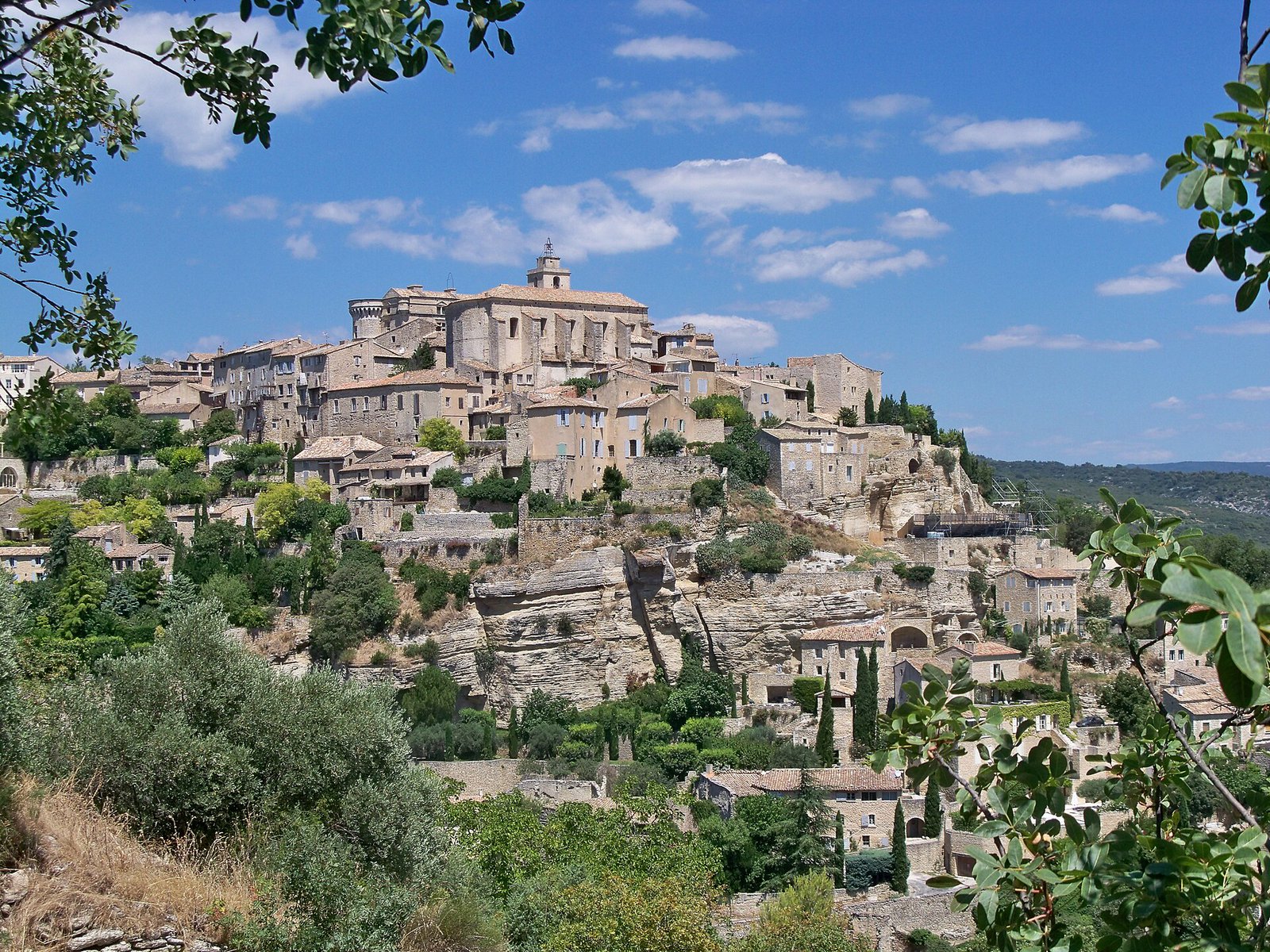
The postcard of Gordes — the whole village stacked on its rock and glowing — is taken from the viewpoint on the approach road west of the village, not from inside it. Come for the last hour of light, when the stone turns from grey to honey to amber and the valley below goes soft. The honest part: you will not be alone. That railing draws photographers every single evening in season. What works is arriving well before sunset, doing your vows or portraits slightly off to the side, and letting someone who knows the pull-offs frame you so the crowd stays out of the picture. Inside the village, the steep cobbled lanes are genuinely quiet early in the morning — a strong argument for splitting your day in two. More detail in our Gordes guide.
Sénanque Abbey: a working monastery, not a backdrop
Sénanque is the lavender photo: the twelfth-century abbey with purple rows running to its walls. Two things matter. First, the bloom window — roughly late June to mid-July, shifting a little with each year's weather, so build your date around it rather than hoping. Second, non-negotiable: this is a working monastery where monks live and pray. Keep your voices down, stay out of the marked rows, and forget any idea of drone stunts over the cloister. Couples who treat the place with respect get better photos anyway — stillness shows in the frame.
Valensole: lavender to the horizon
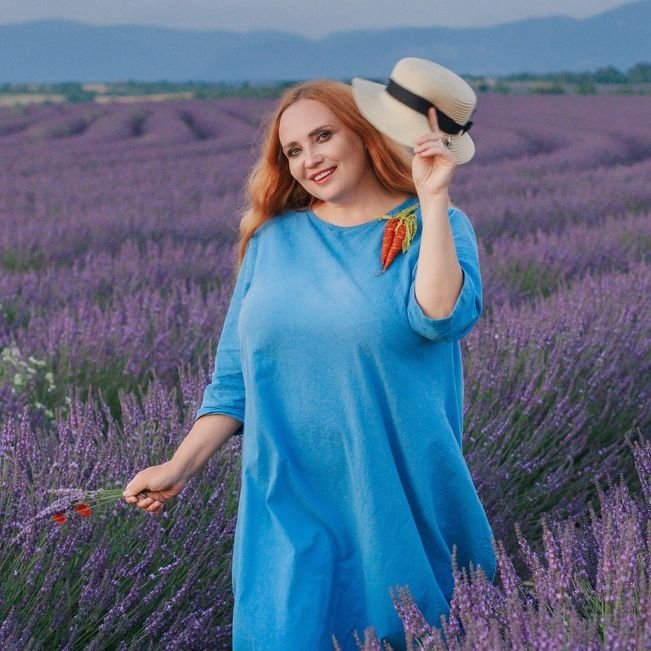
If Sénanque is intimacy, the Valensole plateau is scale — dead-straight rows of lavender running to the horizon, ideally with a lone tree in the middle distance. Same bloom window, roughly late June to mid-July. These are working farms: walk the tractor lines between rows, never through the plants. Golden hour is the moment; midday lavender photographs flat and harsh. And wear closed shoes — a July lavender field is loud with bees, which bother exactly nobody who watches their step.
The Luberon: ochre cliffs and quiet stone
Roussillon is the colour shock of the region — rust, orange and blood-red ochre cliffs and trails through a former quarry. The pigment gets on everything, and a white dress will pick up an ochre hem, so decide beforehand whether that is a stain or a souvenir. Nearby Ménerbes is what people picture when they say Luberon village: heavy doors, quiet lanes, and a fraction of the crowds of Gordes. It makes a beautiful low-key setting for couple portraits between the headline stops.
What clients say about this kind of shoot
Adel has that rare power of turning magical moments into memories that last. He puts you at ease straight away, advising you or giving you space, always kindly. Forever attentive to what you want and with unmatched professionalism, he is the supplier you dream of! We can only recommend him wholeheartedly.
— Juliette on Adel B.
We warmly recommend Adel's work! His professionalism, his creativity and his energy were invaluable throughout our wedding day. We were able to rely on how seriously he took it, and on his good humour, to simply let go and enjoy the most beautiful day of our lives in the best possible way! Having Adel on your team on the day means having an ally to guide you and take the stress away — not just for you, but for everyone else too! 5/5! And on top of that, the photos are ✨
— Velaurie on Adel B.
Aurélie was the photographer for our wedding in June 2026, and we couldn't be happier with her work. Everything went perfectly, from the initial booking and planning call to the wedding day itself, right through to the delivery of our photos. Aurélie was incredibly kind, thoughtful, and supportive throughout the entire process. She took the time to listen to our wishes while also suggesting photo ideas we would never have thought of ourselves — and we are so grateful to have those memories today. The photographs are absolutely beautiful and perfectly reflect the style shown on her website. She was also extremely responsive to our emails and always took the time to answer every question we had. A huge thank you for your professionalism, your kindness, and for giving us such a beautiful lasting memory of our wedding day. ❤️
— Julia & Mehdi on Aurélie B.
He was genuinely brilliant! He suggested beautiful spots for our couple shoot and knew how to guide us while still letting us enjoy the moment. He was present and available all day long, without ever seeming to tire! He even did far more than you'd expect of a photographer — in particular by making sure nothing distracted us during the important moments. He also didn't hesitate to photograph guests who asked, while we weren't available. Skilled and genuinely involved, it was a real pleasure to have him with us. Thank you again for your work and your good spirits. We'd love to work with you again!
— Wilona on Adel B.
From our very first meeting, we knew we had made the right choice. You were incredibly kind, gentle and thoughtful throughout that day that mattered so much to us. You managed to put everyone at ease, even the shyest, with great simplicity and good humour. Thanks to you, every photo was taken in spontaneity and emotion. And what can we say about the result… The photos are quite simply magical. They are beautiful and capture perfectly every look, every smile and every emotion of our wedding. We relive that day every time we look at them.
— Charlotte on Adel B.
We had an excellent experience with Adel. He listened to us and gave us good advice. He was attentive to the key moments of our day. The photos are beautiful; they carry the emotion of the moment. We're so glad Adel managed to immortalise something that mattered to us.
— Astrid on Adel B.
Cassis and the calanques
If you want water in your elopement, Cassis is the move: a real fishing port under high cliffs, with the calanques — narrow limestone inlets holding improbably turquoise water — just beyond. The honest part: the calanques are a protected national park, access can be restricted in high summer because of fire risk, and reaching the best ones means a proper walk. Hold the ceremony in town or on the accessible headlands, and treat the calanque hike as a portrait session with good shoes, not a place to carry a wedding arch.
The paperwork, honestly
Here is the part most planners dance around: getting legally married in France as a visiting foreign couple involves residency and paperwork requirements that make it impractical for most people who do not live here. The overwhelmingly common solution — and the one we recommend — is to handle the legal part at home, then hold a symbolic ceremony in Provence. Nobody standing with you under the plane trees can tell the difference, and it removes every constraint on your timing and your venue. Symbolic also means flexible: a cliff at Cassis, a lavender row, a shaded courtyard — anywhere you can stand, you can marry.
Mistral and heat: plan for both
The mistral is a cold, dry wind from the north that can blow hard for several days at a stretch. It is the reason Provence has its famously clear light — and it will wreck an unpinned veil, loose hair and any decor that is not weighted down. Choose a hairstyle that survives movement, anchor everything, and keep a sheltered plan B location in your pocket. Summer heat is the other enemy: in July and August, shoot early morning or evening and stay out of the midday sun entirely. The light is better at those hours anyway, and so is everyone's patience.
Book your photographer, then relax
At an elopement your photographer is more than a vendor — for most of the day they are your only witness, and often your timekeeper and local fixer too. Choose someone who knows where the light lands on Gordes in late June and where the buses park at Sénanque. On Photo France you can browse photographers across Provence with real portfolios and transparent pricing, and book from €299. Set your date around the lavender if the lavender matters to you; otherwise pick May, September or early October, when the light is kinder, the crowds thin out, and Provence feels — briefly, gloriously — like it belongs to the two of you.
Frequently asked questions
When does the lavender bloom in Provence?
Roughly from late June to mid-July, shifting a little each year with the weather and the altitude of the field. Sénanque Abbey and the Valensole plateau are the classic settings, and both follow the same window. If lavender is the point of your elopement, build the date around those weeks and ask your photographer to confirm field conditions close to the day. Outside the window, Provence still gives you hill villages, ochre cliffs and vineyards.
Can foreign couples legally marry in Provence?
For most visiting couples it is impractical: a legal wedding in France involves residency and paperwork requirements that few travellers can meet. The common solution is to complete the legal part at home and hold a symbolic ceremony in Provence, which frees you to choose any date and any place you can stand, from a Cassis cliff to a lavender row. This is general guidance, not legal advice, so check the current rules with your own authorities.
What is the best month to elope in Provence if lavender does not matter?
May, September and early October. The light is softer, the crowds at viewpoints such as Gordes thin out, and the summer heat has gone. In July and August, plan your ceremony and portraits for early morning or evening and stay out of the midday sun. Whatever the month, prepare for the mistral: choose a hairstyle that survives wind, anchor any decor, and keep a sheltered plan B location in reserve.
How do I book an elopement photographer in Provence?
Photo France is a marketplace of vetted local photographers who know where the light lands on Gordes and where the coaches park at Sénanque. You can browse portfolios and book directly, or use Quick Booking from €299 for any listed region on any date, with a photographer assigned within 24 hours. Sessions usually last one to two hours, and your edited photos arrive online, typically within about a week.
Want professional photos in Gordes?
Browse portfolios, compare packages, and book a verified local photographer in minutes.