Photo spot in Yvoire & the French shore of Lake Geneva
The medieval gates and the flowered lanes
Grey stone lanes inside a fourteenth-century wall, hung with geraniums and petunias from June to September — the reason Yvoire wins its flowering prizes.
About The medieval gates and the flowered lanes
Get directionsYvoire was fortified in 1306 by Amédée V of Savoy and never outgrew its wall, so the old village is still a closed grid of narrow lanes entered through stone gates. That is the whole appeal for a photographer: everything is one frame from everything else, and there is no modern building anywhere in the picture. From June to September the walls carry geraniums, petunias and climbers on almost every level, and the contrast between grey stone and saturated flower colour is what the village is known for.
The gates are the strongest frames — a dark stone arch with the lit lane behind it puts your subject in a natural vignette. After that, work the lanes themselves: shoot from one end so the flower boxes stack down both sides, and use the doorways as pockets of shade when the sun is high. The stone is warm-toned and forgiving, which helps skin tones in the middle of the day.
Crowds are the problem, not the light. Day boats land visitors continuously from mid-morning to late afternoon, and these lanes are two metres wide — a queue shows in every frame. Before ten and after five you can have them almost to yourselves.
Winter is honest to plan around: the flowers are gone, and a good part of the village closes from November to March. There is no fee and no permit for the lanes, but people live behind those doors.
Best time to shoot
Before 10am or after 5pm, June to September
Tips
Use the stone gate arches as a frame around your subject. Skip the middle of the day — the lanes are two metres wide and the day boats fill them.
Photographers who shoot at The medieval gates and the flowered lanes
Hand-picked professionals working in Yvoire & the French shore of Lake Geneva

Other spots in Yvoire & the French shore of Lake Geneva
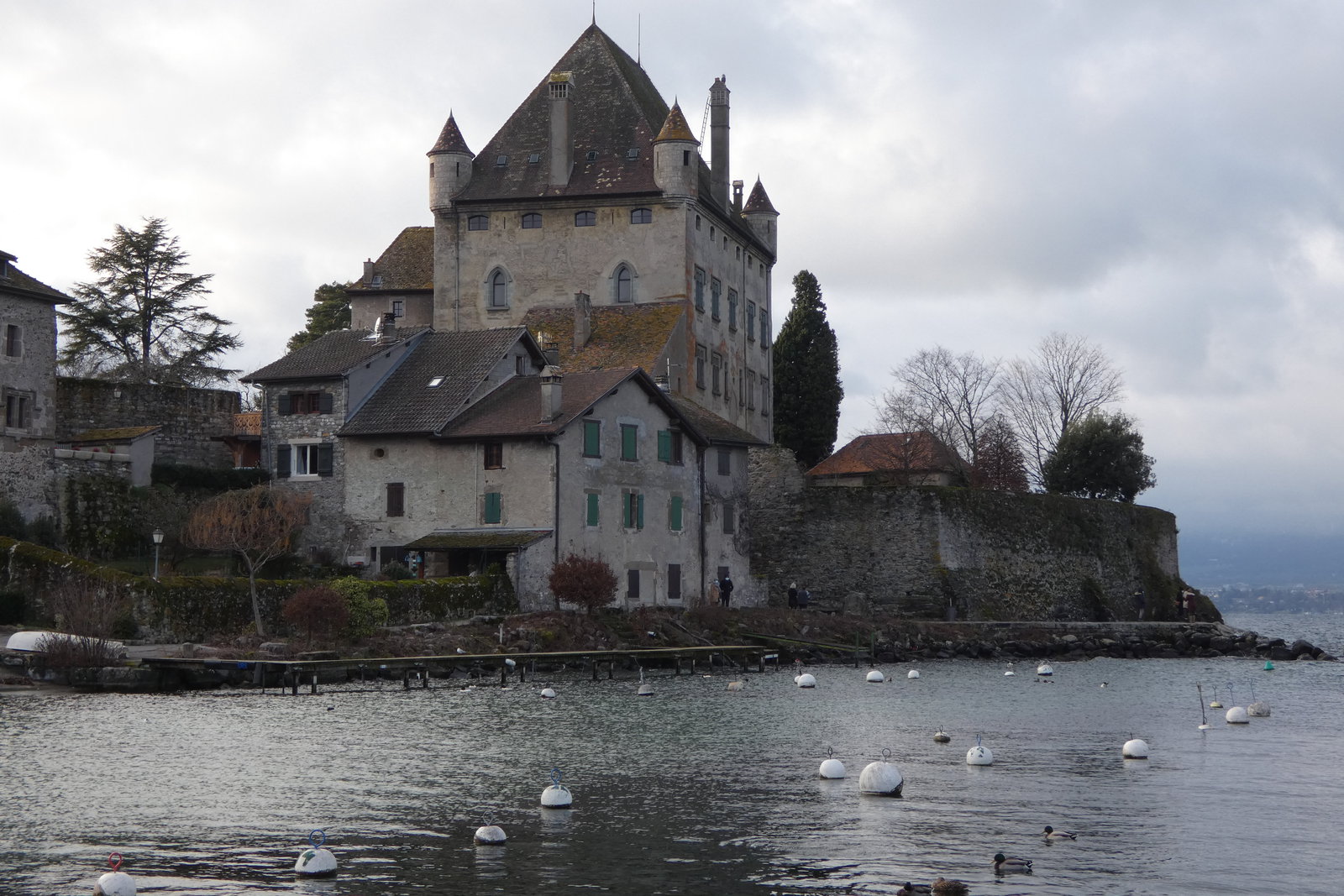
The harbour, the breakwater and the château
The fourteenth-century château standing straight out of the water above the fishermen's harbour, with the Swiss shore as a pale line behind it.
Le Jardin des Cinq Sens
A walled garden laid out in the château's old kitchen plot as a cloister of hornbeam rooms — touch, taste, smell, sight and sound.
Excenevex beach
The only natural sand beach on Lake Geneva — a shallow shelving crescent backed by pines, ten minutes east of Yvoire.
Ready to book?
Our concierge team will hand-pick 2-3 photographers who know The medieval gates and the flowered lanes — free of charge.