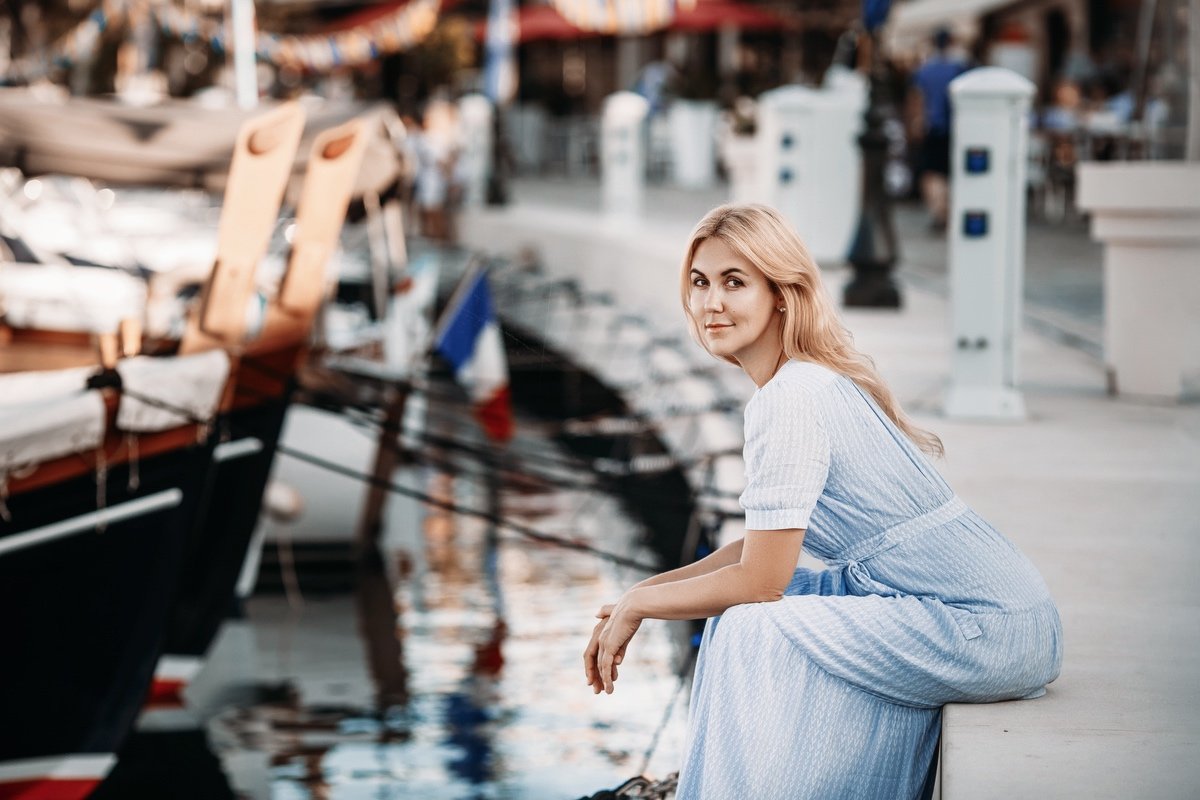
French Riviera Photoshoot Guide 2026: Nice, Èze & the Coast
The French Riviera photographs beautifully and lies about it constantly. The postcards show empty ochre lanes and soft golden light; the reality between May and September is cruise-ship crowds by mid-morning and hard Mediterranean sun overhead by nine. This guide is the honest version for 2026: where the light actually falls in Nice, Èze, Villefranche-sur-Mer and along the coast, when the crowds turn up, and how to plan a shoot around both instead of pretending they don't exist.
4 photo spots in Nice — click a pin to open the full guide
Real shots from Nice
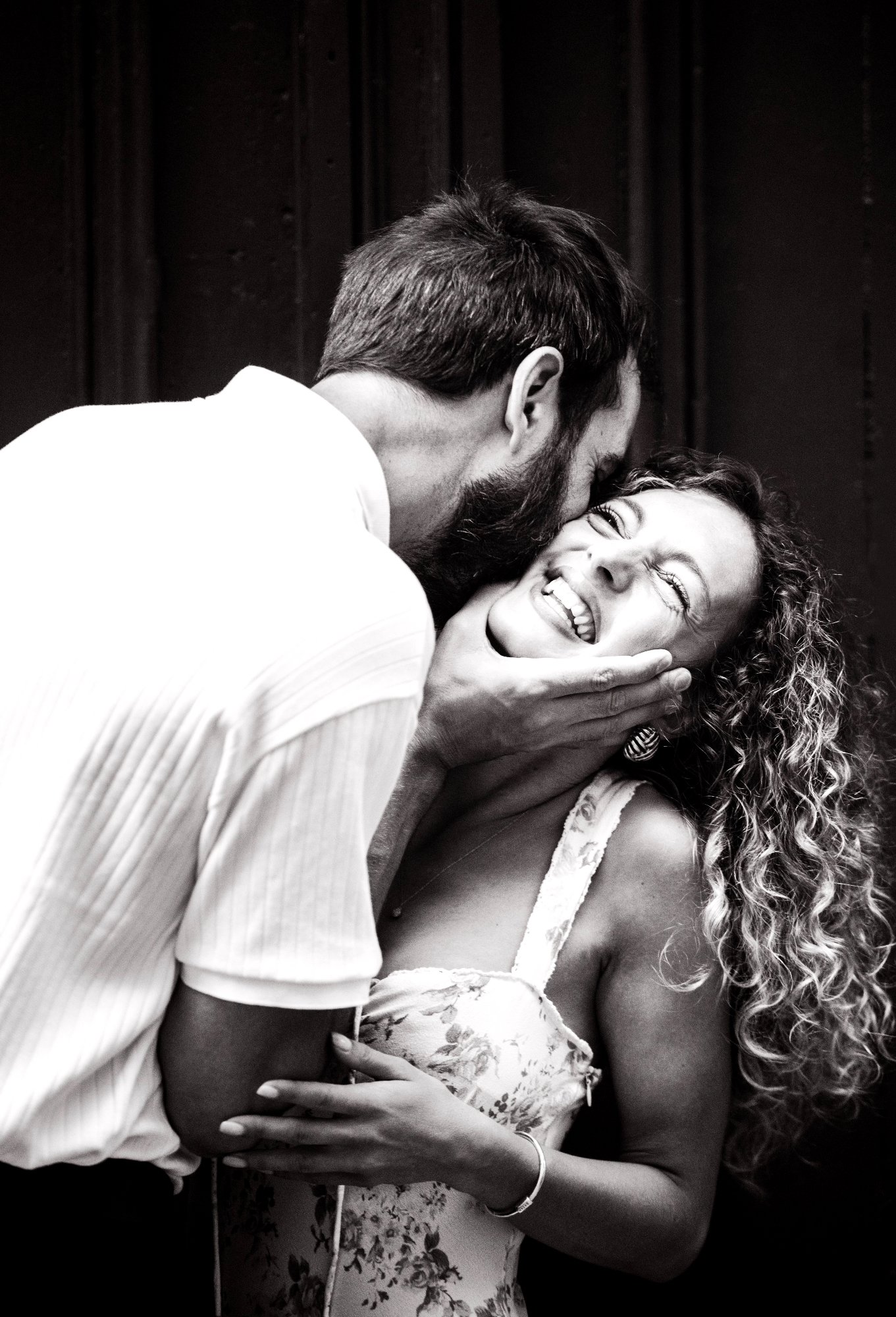
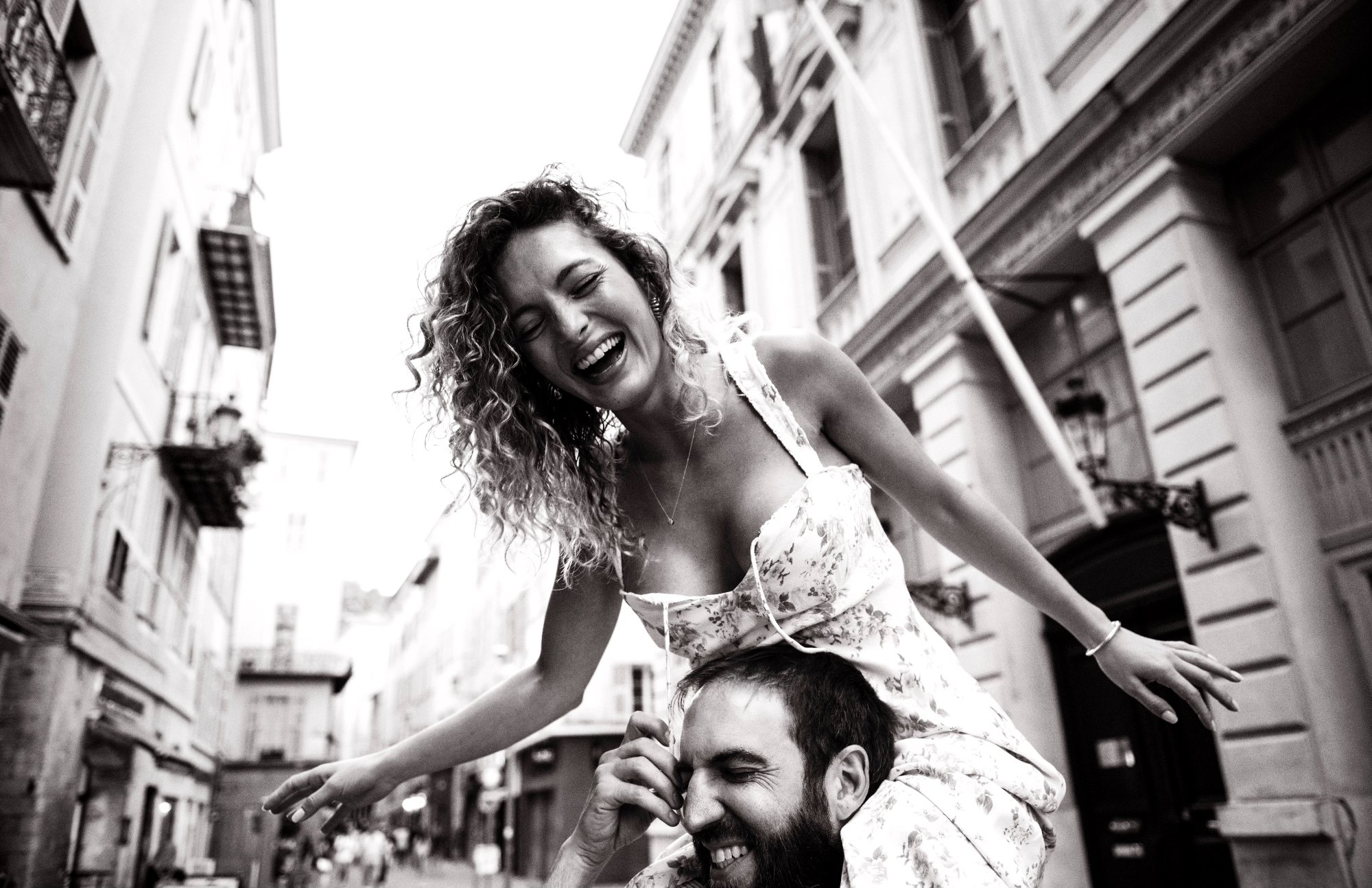
Castle Hill: the view over the Baie des Anges
Castle Hill (Colline du Château) is the one Nice viewpoint that earns its reputation. From the platforms you look down the whole curve of the Baie des Anges, with the Promenade des Anglais sweeping west and the red rooftops of the old town stacked below you. The honest advice: come at sunrise. The light runs along the coastline rather than straight into your lens, the joggers outnumber the tourists, and you can work the railings without queuing for them. There is a lift on the seafront side, but do not build a dawn plan around it — assume the stairs from the old town and give yourselves fifteen unhurried minutes. By late morning in season the platforms are a carousel of phone photographers; a couple portrait there at noon is mostly other people's elbows.
The ochre lanes of Vieux Nice
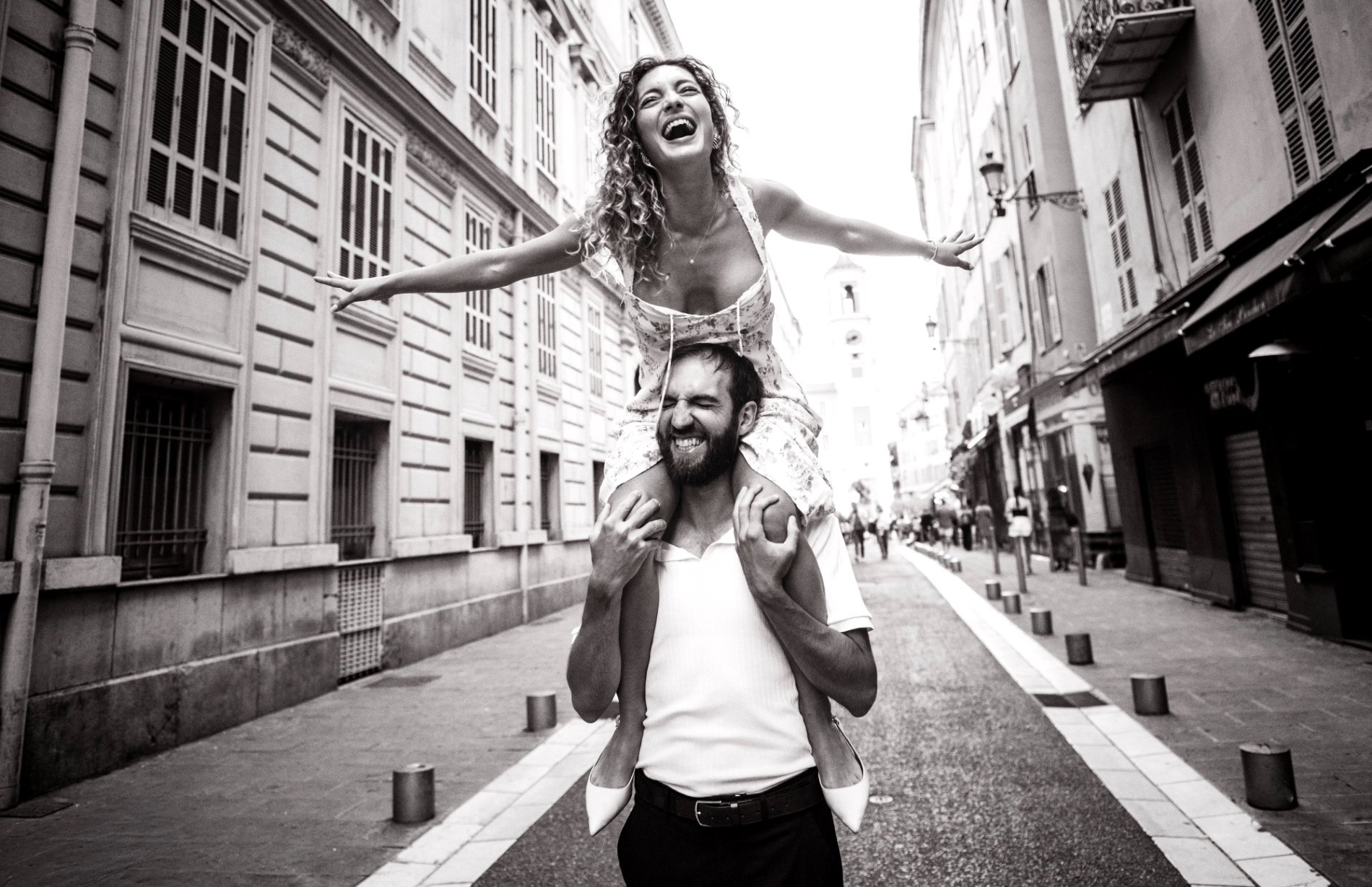
The old town is where Nice actually delivers. The lanes are narrow enough that direct sun rarely reaches the ground, which sounds like a problem and is in fact the gift: the ochre, oxblood and Sardinian yellow façades bounce soft, warm light into the shade all day. Shoot here mid-morning while the light on the upper walls is still low, before the shutters open and the lanes fill. Cours Saleya's market is atmospheric but chaotic — use it for movement and candid frames, not posed portraits. Rain, unusually, is a bonus: wet cobbles double every colour in the street.
Èze and the Jardin Exotique
Èze is a medieval village stacked on a rock high above the sea, and the Jardin Exotique at its summit has the finest terrace view between Nice and Monaco. Be clear-eyed about it: the garden charges an entry fee, the summit is completely exposed, and when the wind blows there is nowhere to hide from it — dresses and loose hair need a plan B. Morning slots are noticeably calmer; by early afternoon the coach tours have arrived and the lanes below, which are barely shoulder-wide, stop being usable for portraits. Full notes on timing the village are in our Èze location guide.
Villefranche-sur-Mer
One bay east of Nice, Villefranche is the town photographers quietly prefer. The waterfront curves like an amphitheatre and looks broadly east across deep, absurdly blue water, which means the coloured façades catch first light while Nice is still waking up. The Rue Obscure — a covered medieval street — gives you shade and texture when the sun gets high, and the citadel walls hold the last warmth of the day. Crowds exist, but on a village scale; this is where to send couples who want the Riviera without performing for an audience.
The ramparts of Antibes
Antibes' old town sits behind genuine sea walls, and walking the ramparts gives you the Mediterranean on one side and stone the colour of toast on the other. On clear days — most reliably in winter and spring — the snow-capped Alps stand behind the bay, a backdrop nobody expects from a beach town. The Plage de la Gravette, tucked inside the walls, works for a sand-and-sea frame without leaving the old town. Market mornings flood the lanes; the ramparts themselves usually stay workable.
What clients say about this kind of shoot
We hired Sarah to take professional photos for a catalogue and a website. The photos were taken outdoors, and the company was very happy with the result. Communication beforehand was very good, and we received the photos very quickly after the day of the shoot.
— Arnaud S. on Sarah V.
Sarah takes really beautiful photos in natural light, and she is extremely easy and pleasant to work with. We had hired her to take individual portraits of our team during a seminar held in Le Lavandou.
— Benoît Y. on Sarah V.
We chose Sarah as the photographer for our wedding and we highly recommend this professional. Discreet, gentle, attentive, full of suggestions for natural poses, she knew how to put us at ease, both us as the newlyweds and our 90 guests. In fact, we'll be calling on her services again as soon as we need to! Thank you Sarah for this sweet moment!
— Namin L. on Sarah V.
Sarah came to photograph my family, who had gathered for our wedding anniversary (40 years) and had come from all over France and abroad. The setting was magical, the island of Porquerolles, and Sarah's photos are gorgeous. She managed to take informal photos that perfectly capture the joy of the whole family (3 generations) at being together again
— Myriam K. on Sarah V.
A pleasure to have worked with Sarah at our corporate event. The photos are perfect and true to the moment. We can only recommend her!
— Les V. on Sarah V.
Adel has that rare power of turning magical moments into memories that last. He puts you at ease straight away, advising you or giving you space, always kindly. Forever attentive to what you want and with unmatched professionalism, he is the supplier you dream of! We can only recommend him wholeheartedly.
— Juliette on Adel B.
Cannes: La Croisette, honestly
La Croisette is a brand more than a view: palms, flags, hotel façades. It photographs best in the first hour of light, when the promenade is empty and the beach clubs haven't set up. The red-carpet steps of the Palais are a queue pretending to be a photo spot — skip them. Climb Le Suquet, the old quarter above the port, for the view of the bay that Cannes actually deserves.
Saint-Tropez: La Ponche
Behind the superyacht harbour hides La Ponche, the old fishing quarter — pastel houses leaning over a small beach, and the closest thing on this coast to a village that ignores its own fame. It shoots wonderfully in the early morning. The catch is getting there: summer traffic into Saint-Tropez is legitimately terrible, so plan it as a morning expedition or save it for the shoulder season.
Golden hour on a south-facing coast
Here is the thing the brochures never mention: this coast faces mostly south. The sun rises along the water in the east and sets along it in the west — it almost never sets over the open sea. In practice that means golden hour delivers long, raking side-light down the coastline, superb for depth and rim light on a couple walking a promenade, and true backlight is achieved by shooting along the shore, not out to sea. East-facing bays like Villefranche glow at sunrise; west-facing curves like the Croisette take the sunset. Pick your bay to match your hour, not the other way round.
Booking your Riviera shoot in 2026
The pattern for the whole coast is simple: shoot at the edges of the day, keep the middle for lunch, and match each location to its light. A local photographer already knows which lane in Vieux Nice is in shade at four and which bench in Villefranche catches the last sun. Browse the photographers on Photo France — sessions start from €299 — pick someone whose portfolio matches your idea, and let them talk you out of the noon slot at Èze. That conversation alone is worth the fee.
Frequently asked questions
What is the best time of day for a photoshoot in Nice?
Sunrise on Castle Hill, when the light runs along the Baie des Anges and joggers outnumber tourists, then mid-morning in the shaded lanes of Vieux Nice, where the ochre façades bounce soft light all day. Between May and September, avoid the middle of the day entirely: the Mediterranean sun is harsh by nine, and the viewpoints fill with cruise-ship crowds. Shoot at the edges of the day and keep the middle for lunch.
Is Èze worth it for a couple photoshoot?
Yes, in the morning. The Jardin Exotique at the summit has the finest terrace view between Nice and Monaco, but it charges an entry fee, it is completely exposed to the wind, and by early afternoon the coach tours have filled the shoulder-wide lanes below. Book an early slot, plan hair and dress for a breeze, and have a sheltered alternative in mind for a windy day.
Which Riviera town is best for photos without the crowds?
Villefranche-sur-Mer, one bay east of Nice. Its waterfront faces broadly east, so the coloured façades catch first light while Nice is still waking up, the covered Rue Obscure gives shade when the sun is high, and the citadel walls hold the last warmth of the day. Antibes' ramparts and La Ponche in Saint-Tropez are the other quiet options, both best early in the morning.
How much does a photoshoot on the French Riviera cost?
Photo France is a marketplace of vetted local photographers, and Quick Booking starts at €299 for any listed region on any date, from Nice and Antibes to Èze and Saint-Tropez, with a photographer assigned within 24 hours. Sessions usually last one to two hours, ideally at sunrise or in the last hour of light, and your photos are delivered edited and online, typically within about a week.
Want professional photos in Nice?
Browse portfolios, compare packages, and book a verified local photographer in minutes.