Photo spot in Giverny
The water garden and the Japanese bridge
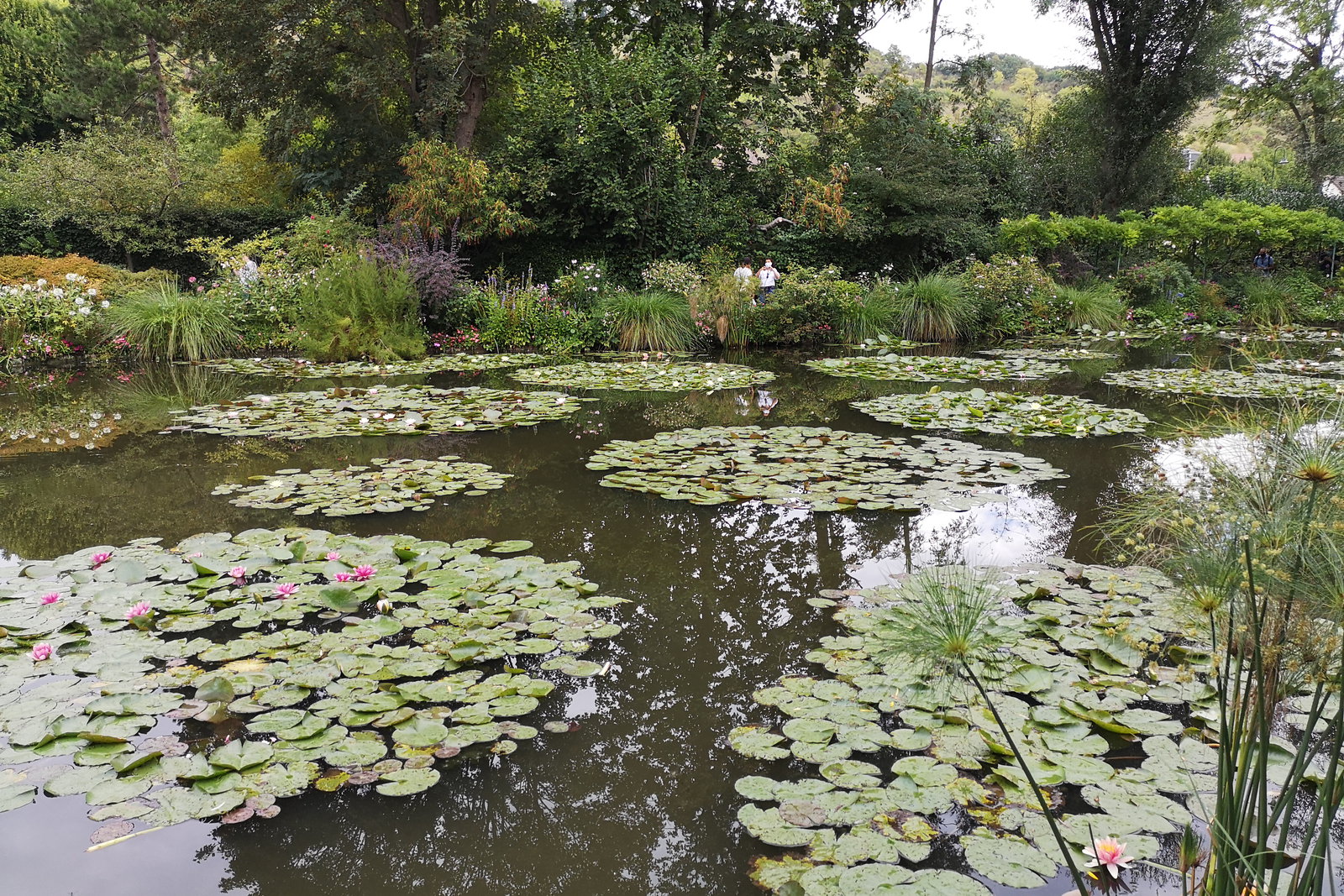
Monet's lily pond with the green wisteria-covered bridge over it — the painting everyone has in their head, and it is still exactly there.
About The water garden and the Japanese bridge
Get directionsMonet diverted a stream to make this pond in 1893, planted willows and bamboo around it and put a green-painted wooden footbridge across the narrow end. The wisteria on the bridge came later. He painted the result for the last thirty years of his life, and the garden is kept to the same plan, which is why standing there feels like walking into the pictures rather than near them.
The two frames are the bridge and the reflections. From the path on the far side, the bridge sits across the water with willow trailing on both sides; from the bridge itself, the pond runs away under lily pads with the sky doubled in it. Water lilies are open from June to September and closed the rest of the year, which changes the picture completely.
Overcast light is better here than sun. Flat cloud kills the glare on the water and lets the reflections read; hard sun blows out the lily pads and puts the willows into contrast the frame cannot hold.
The practical constraint is people. The garden opens around the start of April and closes in early November, closed all winter, and the bridge has a queue on it by mid-morning. The first hour after opening is the only quiet one. Everyone needs a ticket, and the foundation sets its own rules on tripods and shoots beyond visitor photography — check with them before booking a date.
Best time to shoot
The first hour after opening; overcast light beats sun on the water. Lilies are open June to September
Tips
The bridge has a queue by mid-morning — the first hour is the whole opportunity. Everyone needs a ticket, and tripod and shoot rules are the foundation's to set: ask when you book.
Recent work in Giverny
Portfolio shots by photographers covering this area

Natalia D.
View profile →

Natalia D.
View profile →
Natalia D.
View profile →
Natalia D.
View profile →
Natalia D.
View profile →

Natalia D.
View profile →
Natalia D.
View profile →
Natalia D.
View profile →
Natalia D.
View profile →
Natalia D.
View profile →
Natalia D.
View profile →

Natalia D.
View profile →
Natalia D.
View profile →
Natalia D.
View profile →
Natalia D.
View profile →
Natalia D.
View profile →
Natalia D.
View profile →
Photographers who shoot at The water garden and the Japanese bridge
Hand-picked professionals working in Giverny


Other spots in Giverny
The Clos Normand and Monet's pink house
A grid of long flower borders in front of a low pink house with green shutters, with rose arches closing over the central path by late summer.
Rue Claude Monet, the village street
The single lane the whole village is strung along — stone and half-timbered houses, garden walls in flower, and no ticket needed.
Sainte-Radegonde church and Monet's grave
A small Romanesque church at the top of the village with the Monet family plot beside it, and orchards falling away toward the Seine.
Ready to book?
Our concierge team will hand-pick 2-3 photographers who know The water garden and the Japanese bridge — free of charge.