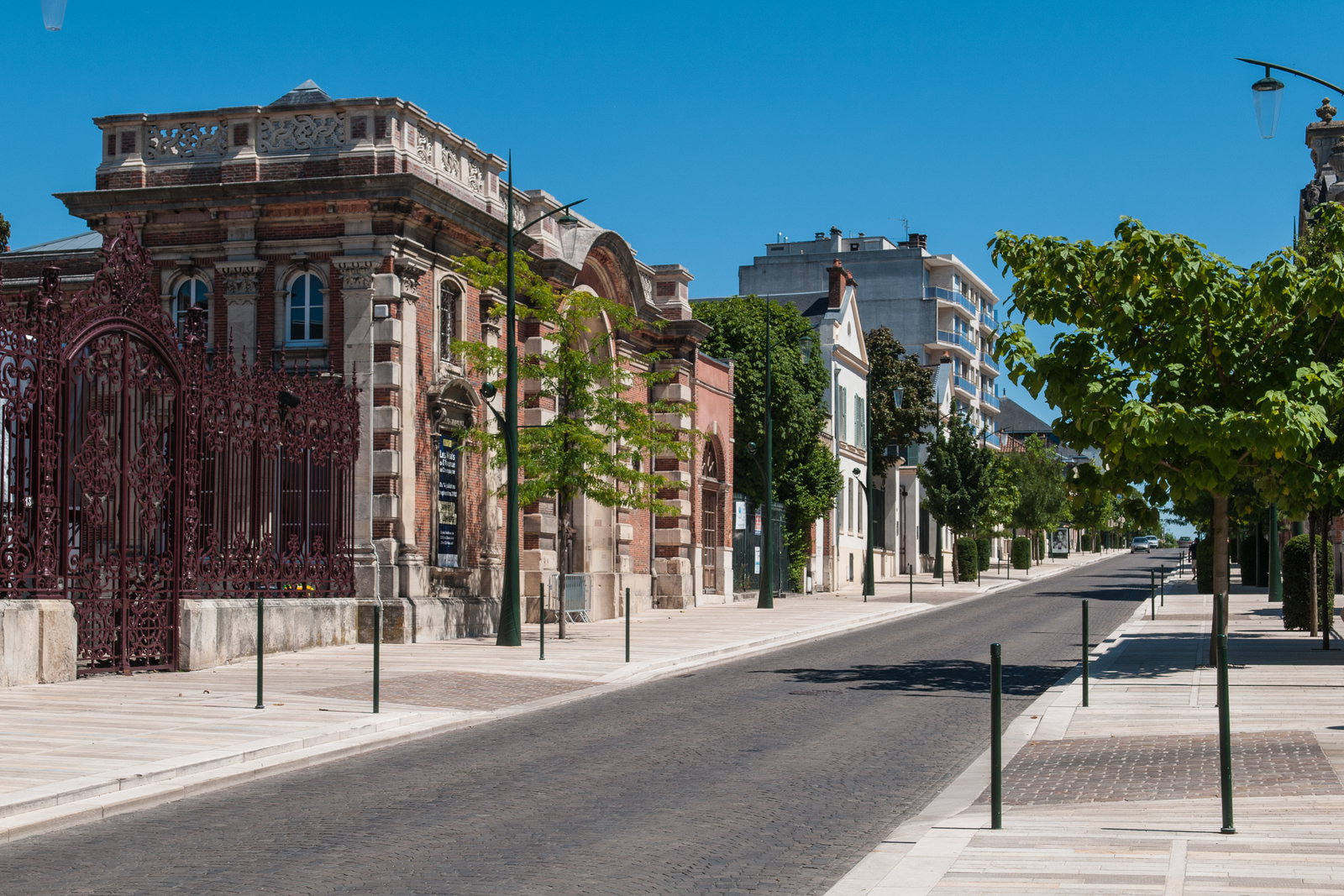
Photo spot in Épernay & the Avenue de Champagne
The chalk cellars under Épernay
Galleries cut into solid chalk beneath the avenue, held at about ten degrees, with bottles stacked in the walls and lamps every few metres.
About The chalk cellars under Épernay
Get directionsUnder the Avenue de Champagne there is a second town. Something like a hundred kilometres of galleries were cut into the chalk beneath Épernay in the nineteenth century, on several levels, and the biggest houses each hold tens of kilometres of them — Moët & Chandon's alone run to about twenty-eight. They are working cellars: bottles stacked in banks along the walls, chalk arches, rail lines in the floor of the older sections, and a steady temperature of about ten degrees whatever the weather is upstairs.
Photographically it is a completely different register from the street above — warm lamplight against white chalk, long receding tunnels, and no daylight at all. Wide, symmetrical frames down a gallery work best; the light is low enough that a fast lens or a steady support matters more than usual.
Every cellar is private property, entered on a ticketed tour on each house's own timetable. Rules on cameras, tripods and anything that looks commercial are set house by house and are genuinely different from one gate to the next — so ask at the moment you book the tour, and be specific about what you want to do. Turning up and asking at the desk usually gets a no.
Dress for it: ten degrees feels cold after twenty minutes, particularly in August when you arrive in summer clothes. Floors are damp chalk and sometimes uneven, which is worth knowing before someone picks heels for the day.
Best time to shoot
Whenever the house runs its tour — there is no daylight underground
Tips
Ask about photography when you book the tour, not at the desk: every house sets its own rules. It's about ten degrees down there and the floors are damp — dress and shoe accordingly.
Recent work in Épernay & the Avenue de Champagne
Portfolio shots by photographers covering this area

Natalia D.
View profile →
Natalia D.
View profile →
Natalia D.
View profile →
Natalia D.
View profile →
Natalia D.
View profile →
Natalia D.
View profile →
Natalia D.
View profile →
Natalia D.
View profile →
Natalia D.
View profile →
Natalia D.
View profile →
Natalia D.
View profile →
Natalia D.
View profile →
Natalia D.
View profile →
Natalia D.
View profile →
Natalia D.
View profile →
Natalia D.
View profile →
Natalia D.
View profile →
Photographers who shoot at The chalk cellars under Épernay
Hand-picked professionals working in Épernay & the Avenue de Champagne

Other spots in Épernay & the Avenue de Champagne
The Avenue de Champagne
A straight kilometre of nineteenth-century champagne houses behind wrought-iron gates and clipped hedges, with the cellars running under the road.
Hautvillers and Dom Pérignon's abbey church
A hillside village of wrought-iron shop signs around the abbey church where Dom Pérignon is buried, with the Marne valley spread out below.
The Verzenay windmill above the vines
A brick tower mill standing alone on a bare knoll of grand cru vines, with the Champagne plain running flat to the horizon behind it.
Ready to book?
Our concierge team will hand-pick 2-3 photographers who know The chalk cellars under Épernay — free of charge.